Venus de Milo
Alexandros of Antioch · c. 130–100 BC
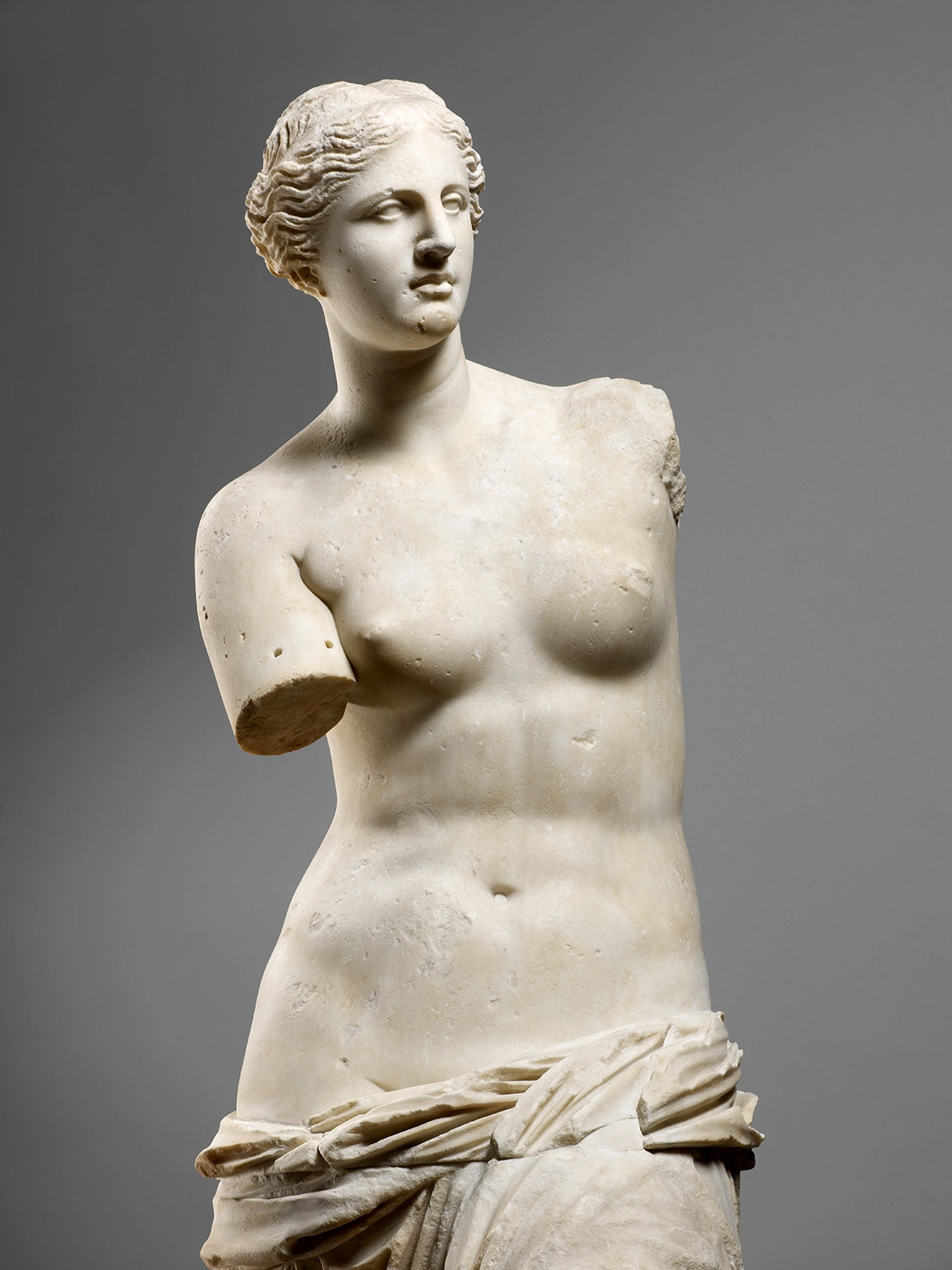
The Venus de Milo is one of the most celebrated sculptures of ancient Greece. Discovered in 1820 on the island of Milos (Melos) in the Aegean Sea, this marble statue depicts Aphrodite, the Greek goddess of love and beauty. The sculpture is believed to be the work of Alexandros of Antioch, based on an inscription found near the statue.
Standing over two meters tall, the figure is carved from Parian marble and was originally composed of several pieces joined together. The missing arms have been the subject of much speculation; some scholars believe she may have been holding an apple, spinning thread, or shielding herself with a shield. The slightly twisting pose, known as contrapposto, gives the figure a sense of natural movement and grace that exemplifies the ideals of Hellenistic sculpture.
The sculpture was presented to King Louis XVIII, who donated it to the Louvre in 1821. It quickly became one of the museum's most prized possessions and a symbol of classical beauty. The Venus de Milo continues to captivate visitors with her serene expression and timeless elegance.