Winged Victory of Samothrace
Unknown · c. 200–190 BC
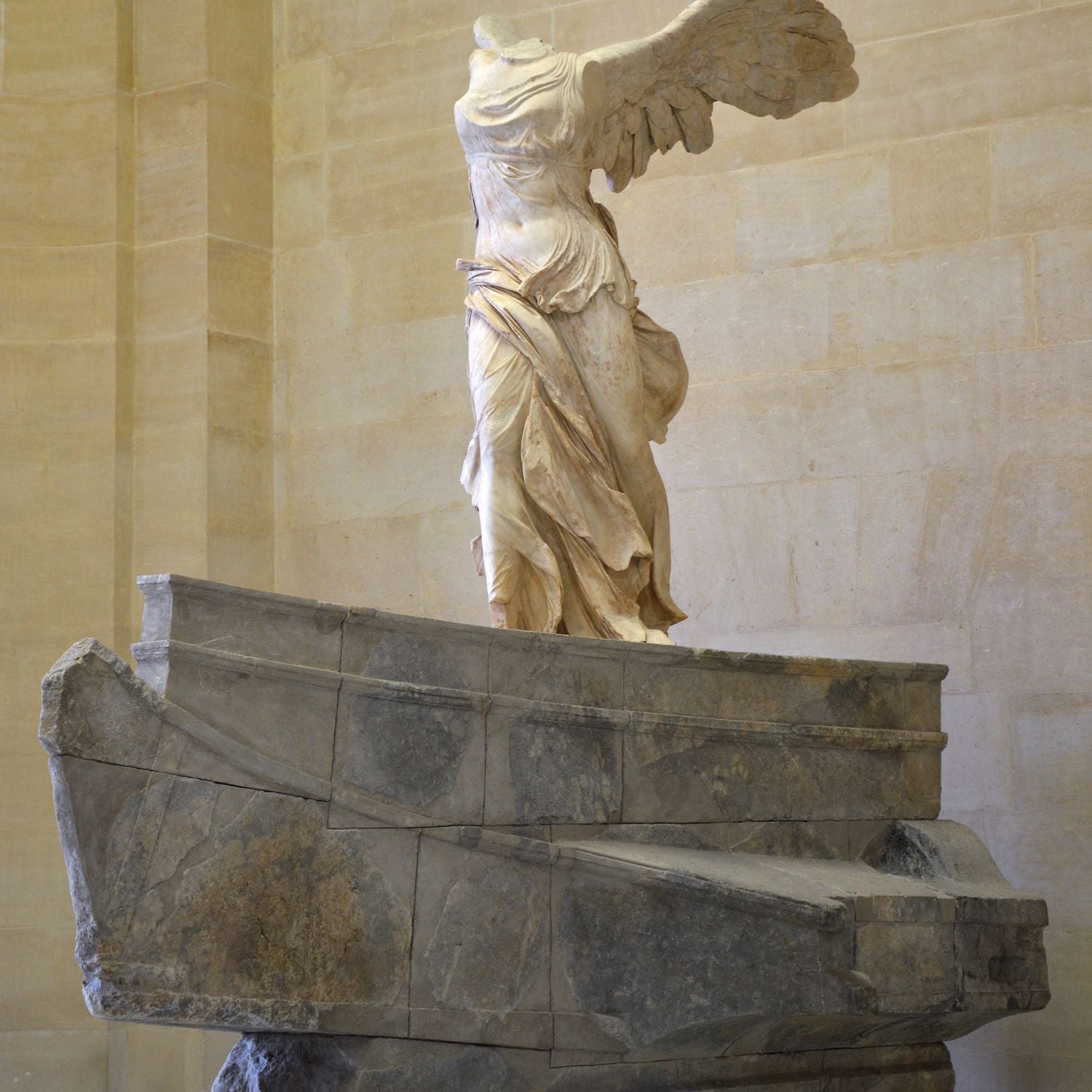
The Winged Victory of Samothrace, also called the Nike of Samothrace, is a masterpiece of Hellenistic sculpture depicting Nike, the Greek goddess of victory. Discovered in 1863 on the island of Samothrace in the Aegean Sea, the statue was found in fragments and painstakingly reassembled. It originally stood at the prow of a stone ship, creating the dramatic impression of a goddess alighting on the bow of a vessel.
The sculpture is remarkable for its sense of dynamic movement. The wind-swept drapery clings to the figure's body, revealing the form beneath while billowing dramatically behind her. The outstretched wings convey a powerful sense of forward motion, as if Nike has just descended from the heavens. The technical virtuosity of the carving, particularly in the rendering of wet fabric against skin, represents the pinnacle of Hellenistic sculptural achievement.
Displayed prominently at the top of the Daru Staircase in the Denon Wing, the Winged Victory is one of the first great works visitors encounter upon entering the Louvre. Its commanding presence and dramatic positioning make it one of the most photographed artworks in the museum.