The Code of Hammurabi
Babylonian · c. 1754 BC
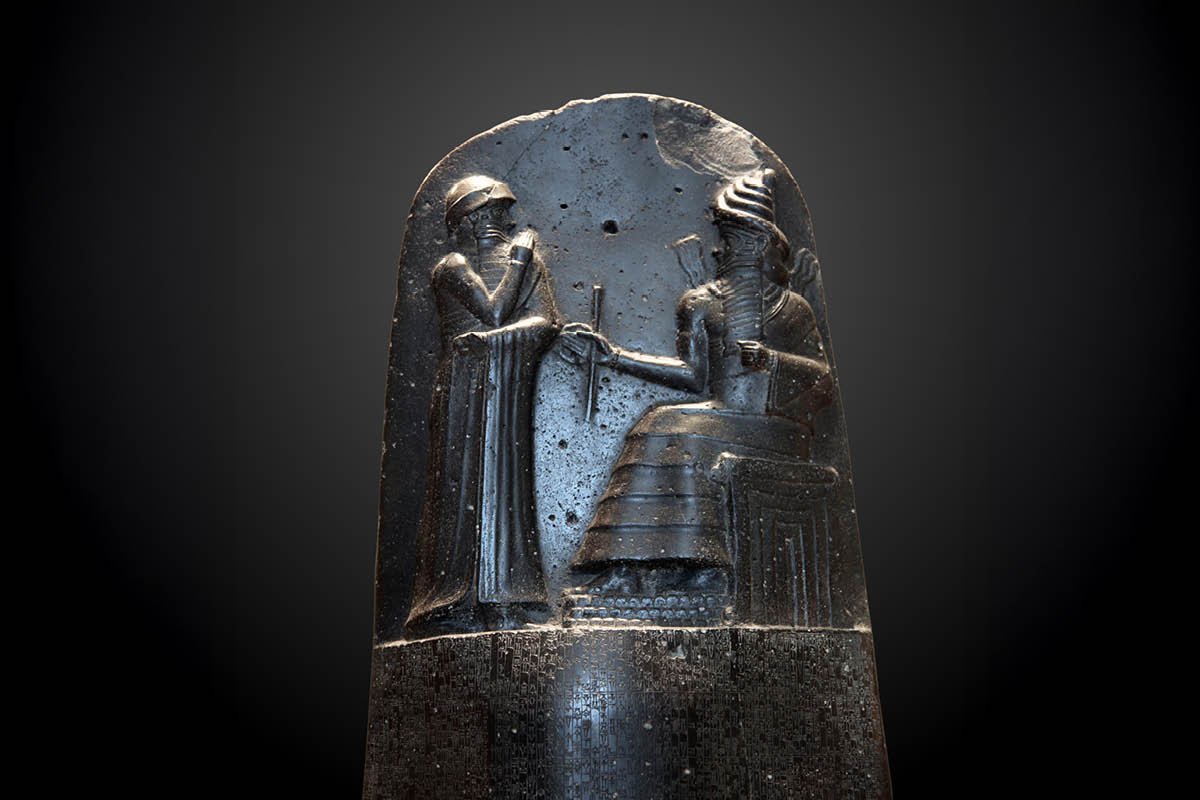
The Code of Hammurabi is one of the oldest and most complete written legal codes in human history. Inscribed on a black diorite stele standing over two meters tall, the code was enacted by Hammurabi, the sixth king of the First Babylonian Dynasty, around 1754 BC. The stele contains 282 laws covering a wide range of social, economic, and criminal matters.
At the top of the stele, a relief sculpture depicts Hammurabi standing before Shamash, the sun god and god of justice, who is seated on a throne and extending the rod and ring of sovereignty. Below this iconic image, the laws are inscribed in cuneiform script in the Akkadian language. The laws address topics including property rights, trade, family relations, labor, and criminal penalties, following the famous principle of proportional justice.
The stele was discovered in 1901–1902 by French archaeologist Jacques de Morgan at the ancient city of Susa in present-day Iran, where it had been taken as war booty by the Elamite king Shutruk-Nahhunte in the 12th century BC. It has been one of the Louvre's most important antiquities since its discovery, representing a foundational document of human civilization.